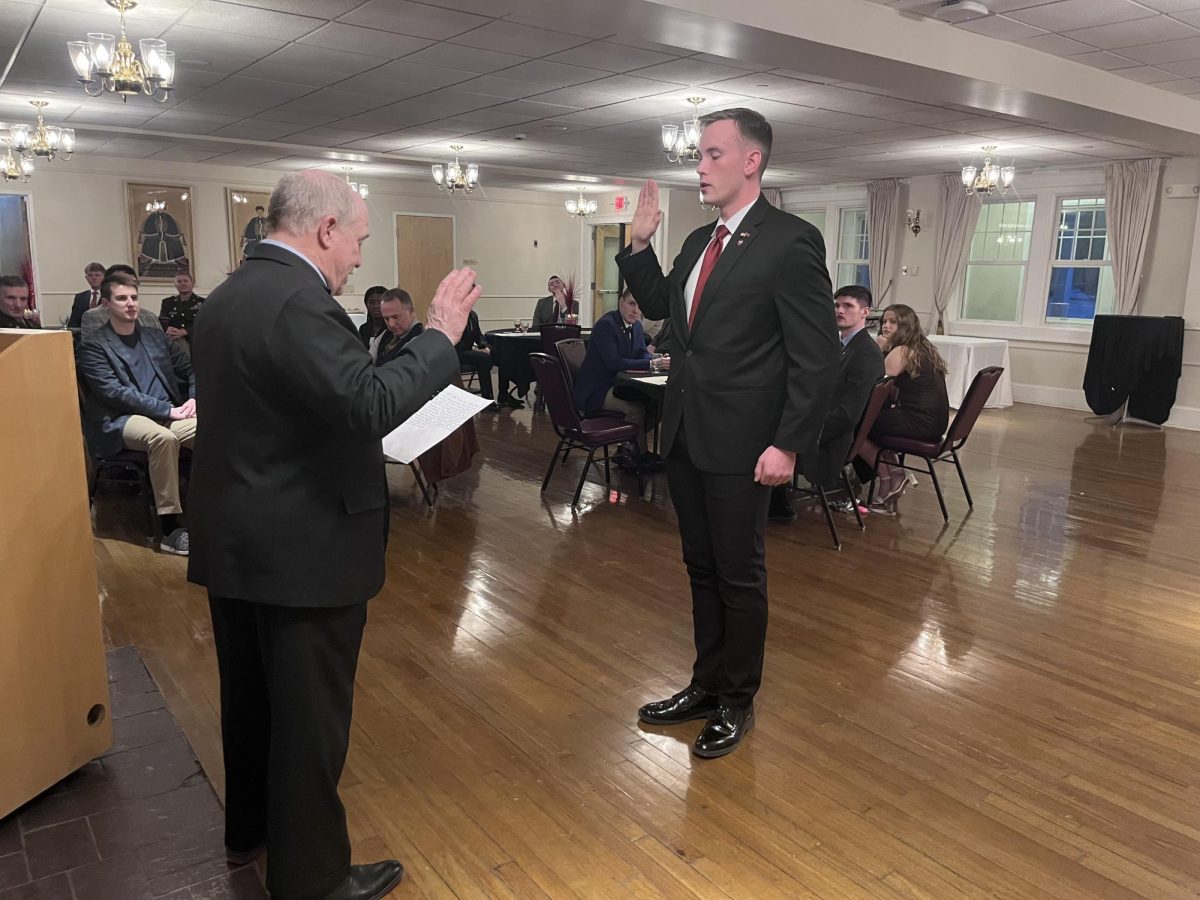





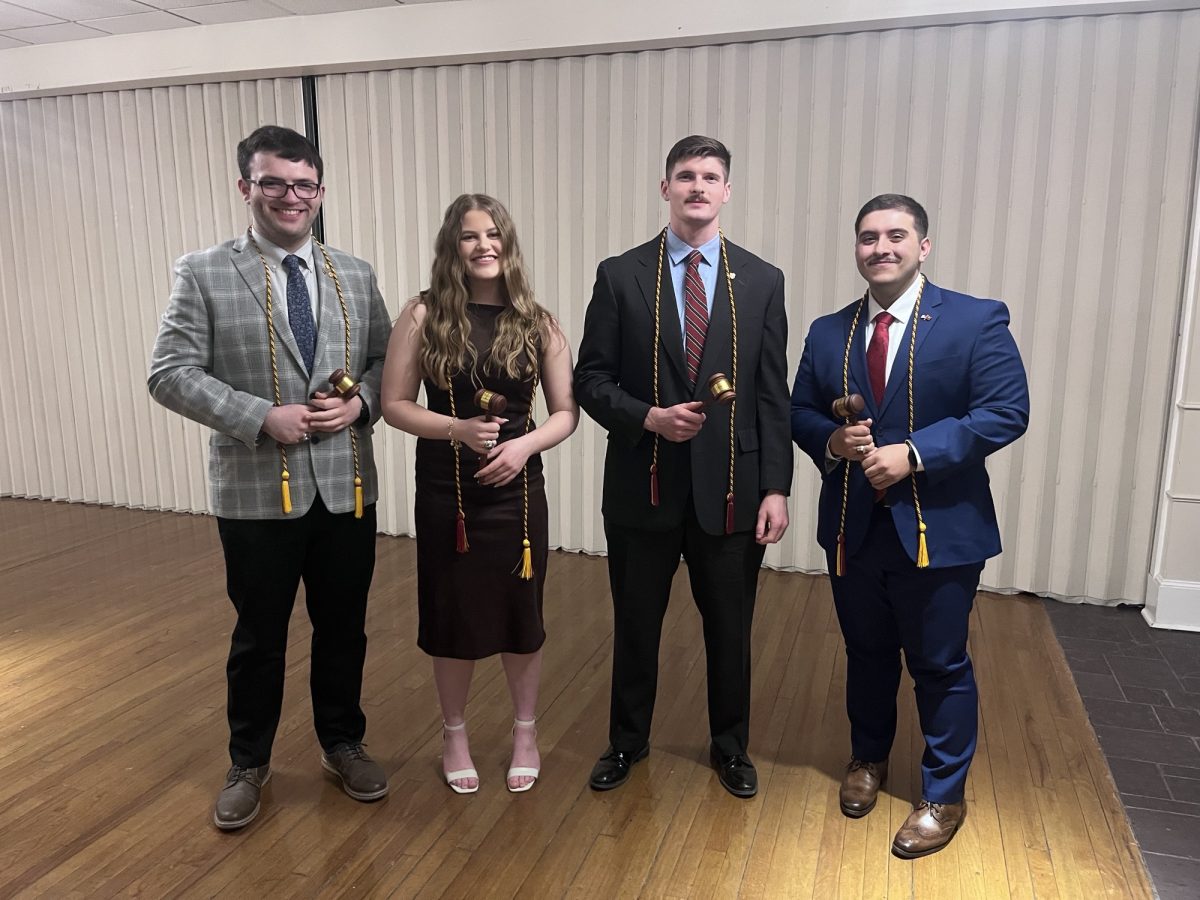
With the recent election of Mason Jakober as the next president of the Norwich University
Student Government Association (NUSGA) and the 2025-2026 school year coming to a close, former
president Hector Aponte, a senior Norwich student from Taunton Mass., handed the reins off to
Jakober and his leadership team.
After 4 years in the organization, Aponte sat down to with The Guidon to reflect on his college
career of student government service and offer some well-founded advice to any future
members of SGA
How did you first get started with SGA?
When I originally started here back in the Fall semester of 2022, I was looking for clubs to get
involved with, and I figured that—as a Political Science major—I should get myself involved in
student government. I thought that it would be just a reasonable connection to have, so I
decided to try it out alongside a couple of other friends who were also interested.
Once we started getting involved in the student council, we would participate in meetings as
much as possible. We could talk, we could ask questions—the only thing we didn’t have was the
ability to vote on Senate decisions, given we were just freshmen at the time.
But it was still good to see how the Senate operated, its relationship with the executive and kind
of what the student government at the time was geared towards. They did a lot of internal bill
making. They looked at problems they saw on the campus in areas that they could influence
change. Two of the main ones that come to mind were the Student Bill of Rights that came out
of that year [AY 2022-2023], and then we had a pretty big hand in getting health products in the
academic building restrooms.
On that note—since the time that you joined SGA, what would you say has been the
biggest change that you’ve seen made, either under your supervision or otherwise?
I wouldn’t say it’s anything tangible, but definitely the relationship we’ve built with the faculty,
staff, and administrators. Early on in my time with SGA, it was very hard to see those
connections at play—but I think through these past four years, we’ve done a really good job of
being proactive and seeking out these faculty-run or committees or staff members or members
of the administration to not only ask questions about how we can pursue something, but also
get into discussions on how we can just improve the campus environment, both from our end
looking out as students, but also things that they foresee.
SGA leadership elections were held a few weeks ago, which marked the end of your run as president of the association. How did it feel, having to step down after all this time?
Very bittersweet, for sure. I think once you’ve been in a group organization for long enough and
dedicated most of your college career to it, you can’t help but feel a little emotionally attached.
I’ve certainly enjoyed my time in student government, but as I’m looking out to what lies past
graduation—I knew there needed to be a time to step away.
At the same time though, it had to happen. Not only for the obvious reason of me graduating,
but when you know your time’s going to come—it’s good to get off the train at the right time
rather than trying to hold on. Besides, I’m happy with the work that we’ve [outgoing seniors]
done in starting this transition process in the last couple of weeks, so that the incoming
leadership can be prepared to get the ball rolling.
In your opinion, what was the biggest recent watershed moment for SGA in terms of
visibility on campus and to the student body?
I’d say the most prominent one that comes to mind was at the end of this past fall semester,
where we held a free hot chocolate event; free with an asterisk though, where the only price
was giving any kind of feedback they wanted to give to Student Government. The event was
held a few days before the end of the semester and we did that during dinner rush hours right
outside the dining hall. It was getting colder, and hot chocolate is always very nice in the colder
weather here in Vermont. All those factors combined really helped boost our image on campus
and helped students see us in action.
Something that I’ve recognized in my last year here is that a lot of people at Norwich look at
student government and see just another club. Which isn’t exactly wrong, but I think where this
disconnect comes from is that a lot of SGA’s operations have been behind closed doors. Almost
90% of what we do is meetings—meetings with student groups, facility representatives, faculty
committees, administrators in Jackman Hall—all of which are, like I said, behind closed doors.
A lot of it is also emailing, and students don’t see that. So if they are thinking of us as “just
another club”, they don’t see what we’re doing most of the time. They just see that we’re either
not doing events or rarely doing events, and almost write us off as borderline inactive. So all in
all, I think that event was to not only get ourselves out there more—but also clear up the
misunderstanding of what student government is.
Circling back to the hot chocolate event itself for a second, I’m curious as to how many
responses you actually got from the students?
I forget the exact number, but it was definitely around 150 to 200. Which really isn’t bad for
camping outside the dining hall for an hour and a half. And if you ask me, I think that this was
the perfect way for us to engage with the student body. Just asking people to write down a little
something on a physical piece of paper to get a cup of hot chocolate—simple and, well,
incredibly effective.
Are you hopeful about the SGA’s future, and—perhaps more importantly—satisfied with
the way you’ve left it?
A resounding yes to both! When I first came into being the SGA president this year, my main
goal was stability and creating a foundation for not only the then-current SGA group—but also
for future groups in SGA to be able to build upon and kind of expand their reach. Sometimes
we’ll have administrations within student government that are really focused on one or two
major issues, which sometimes works out…but it’s really hard to take a continuity from year to
year if there’s almost this tunnel vision clouding the current SGA administration and their goals.
So again, my main goal this past year wasn’t to try to focus directly on one or two things—but
rather create that foundation for this upcoming SGA group of leadership and beyond. After that?
Only time will tell what it’ll look like…but I’m glad I could help build a solid foundation for the
future of SGA. Because without one, it would be very easy for everything to just crumble.